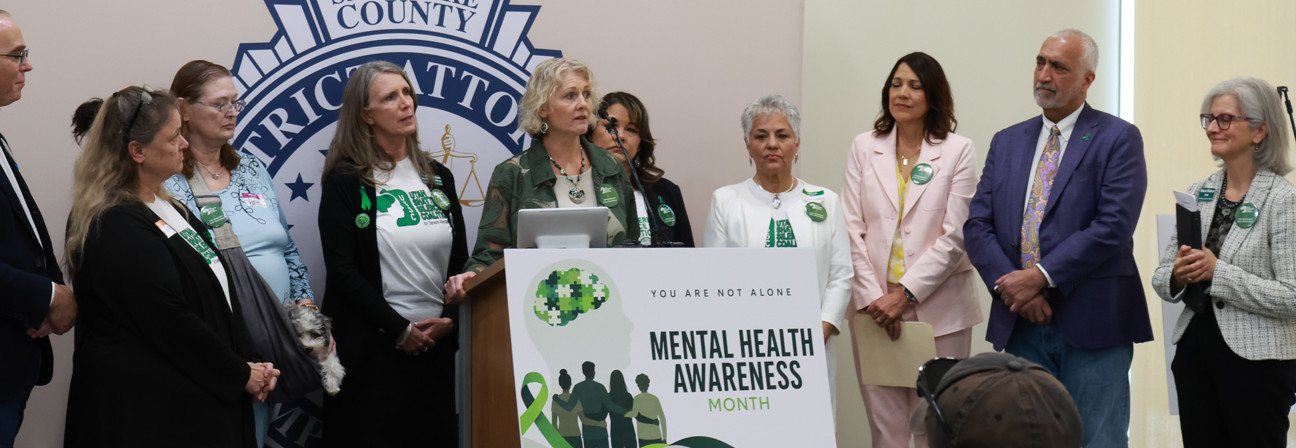
Salt Lake City— Today, Salt Lake County District Attorney Sim Gill joined mental health advocates and family members to recognize Mental Health Awareness Month and discuss the need for stronger mental health treatment systems and greater support for families caring for loved ones living with serious mental illness.
The press conference coincided with the Salt Lake County District Attorney’s Office’s second Symposium on Criminal Justice and Mental Health. DA Gill discussed the role Mental Health Court has played in reducing repeat interactions with the criminal justice system and highlighted gaps in the broader mental health system that often leave law enforcement and prosecutors responding to people in crisis. Data shared during the event showed reductions in jail bookings, jail days, and repeat criminal justice involvement among Mental Health Court participants who received treatment and support services. In addition, DA Gill discussed efforts underway through Salt Lake County’s Leifman Project and broader partnerships aimed at diverting individuals away from the criminal justice system and toward treatment resources. He emphasized the importance of including families in mental health treatment and policy conversations.
“The last place you want somebody with an acute mental illness to be is going through the criminal justice system. That speaks to the reality of how our criminal justice system is broken. The criminal justice system is that safety net. It's because when there is a failure to respond, the one entity that you can count on to respond is the 911 call,” said Salt Lake County District Attorney Sim Gill. I know very few people who are mentally ill and wake up and say, well, let me see what kind of crimes I can go and commit today. Often their criminal behavior is the consequence of their mental illness, which we've criminalized. We've criminalized it because we are not making the upstream investments that we need to make to actually change the model.”
Leaders of two local mental health advocacy organizations spoke at the press conference about what their organizations see as needs for the families of those with severe mental illness.
“Our loved ones need greater access to case management, employment services, peer support, and permanent supportive housing,” said Sherri Wittwer, Chair of the Utah Coalition for Severe Mental Illness. “Too often, families experience a system that is siloed and difficult to navigate, and as a result, their loved ones are criminalized instead of getting the treatment they need.”
“What families want is simple and it’s achievable,” said Debra Widmer, Director of the Utah Shattering Silence Coalition. “Early intervention, evidence-based treatment, a system that acts before tragedy, not waiting for after. Utah Shattering Silence Coalition exists to ensure that family voice finds a seat at the table everywhere where these decisions are being made, not as a footnote but as a foundation.”

Mental Health Awareness Month: You Are Not Alone