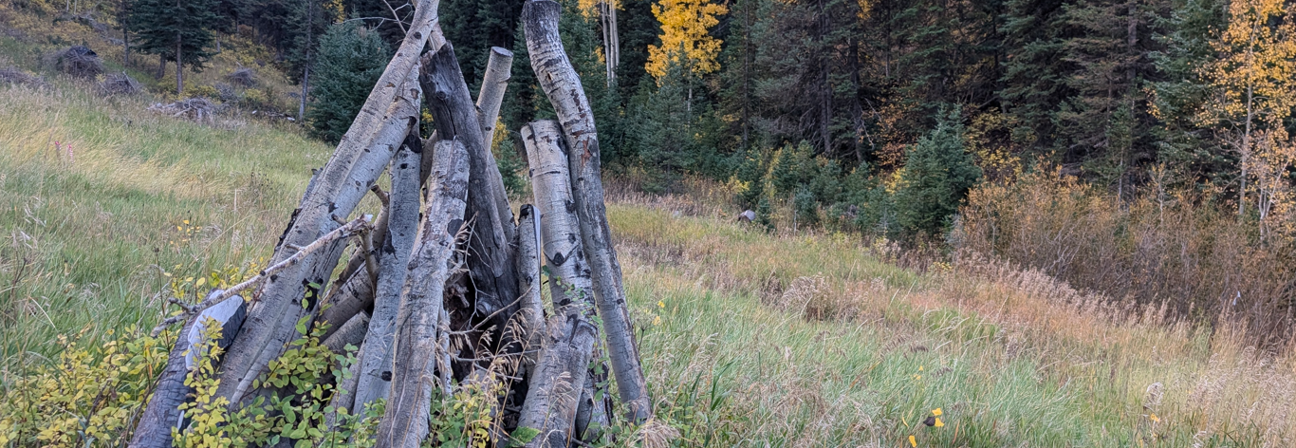
Lodgepole pine, native to the Central Wasatch, has a reciprocal relationship with fire. Its cones are sealed shut with resin, and fire often melts that resin, releasing the seeds inside. The tree doesn't just survive fire. It depends on it to reproduce. Waiting for years, and suddenly you're exactly where you need to be. Some of us can relate.
That's not an isolated quirk. Fire has always shaped how western forests function. It promotes healthy forests by clearing dead brush and small trees, recycling nutrients into the soil, and creating space for new growth. Many of the plants and ecosystems throughout the Wasatch evolved around fire, not despite it.
Why We Stopped Letting Fires Burn
For most of the last century, the dominant approach to forest management was full suppression. Put every fire out as fast as possible. At the time, it seemed like the obvious choice. What we didn't fully understand was that suppression lets fuel pile up year after year. Dead wood, dense undergrowth, and overcrowded stands of trees accumulate instead of periodically clearing out. The result is forests made up of overcrowded tree stands, primed to burn hotter, faster, and more destructively than they would have otherwise.
We understand that tradeoff a lot better now, and land managers have shifted toward actively reintroducing fire under controlled conditions rather than keeping it out entirely.
What Prescribed Fire Actually Buys Us
A prescribed burn is a deliberate, carefully planned fire set under very specific weather and moisture conditions, with crews monitoring the site for days, sometimes weeks, afterward. This reflects a newer, better-understood approach to forest management: rather than fully suppressing fire, the goal is to manage and mitigate it by reducing built-up fuel before it can feed a wildfire later.
That matters in two ways. First, it lowers the odds of a fire starting by removing dry fuel that ignites easily. Second, and just as important, it slows down how fast a future fire can spread through that area. That slower spread buys responders something they rarely have enough of: time. More time to position crews, protect homes, and get ahead of a fire.
What's Happening Locally
Salt Lake County owns two parcels, one in Big Cottonwood Canyon and one in Millcreek Canyon, purchased through the Parks and Recreation Open Space program. In partnership with the Utah Division of Forestry, Fire and State Lands (FFSL), the U.S. Forest Service, and Unified Fire Authority, we have planned prescribed burns on these parcels in the near future.
This work is a direct, local example of the shift described above: using fire intentionally, on our terms, so our canyons are more resilient to the fires we can't control. We extend gratitude to the partners at FFSL and USFS for their critical contributions to aiding the County in this important work.
