Why is the Forest Service planning a Big Cottonwood Canyon Watershed Restoration Project?
The Salt Lake Ranger District (SLRD) of the U.S. Forest Service (USFS) is proposing a major watershed restoration project in Big Cottonwood Canyon aimed at improving forest health and reducing wildfire risk.
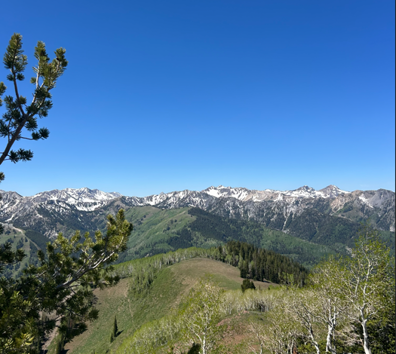
For more than a century, wildfires have largely been suppressed in the canyon. As a result, forests that once experienced periodic fire have become increasingly dense, with large amounts of dead wood and closely packed trees.
Big Cottonwood Canyon is a fire-dependent ecosystem, meaning periodic wildfire historically played an important role in maintaining forest health. Add in widespread tree mortality from insects like the balsam woolly adelgid, and many areas now contain the ingredients for wildfire.
To address these concerns, the SLRD is proposing the Big Cottonwood Canyon Watershed Restoration Project, an effort to improve forest health and reduce wildfire risk.
What exactly is the Forest Service proposing?
In short: helping the forest return to a healthier condition.
The proposal includes thinning dense stands of trees, removing dead and downed vegetation, restoring aspen groves, improving streamside habitat, and using prescribed fire where appropriate. The project would also restore portions of stream and riparian habitat through low-tech restoration techniques that help improve water retention and ecosystem function.
These treatments would occur over several years and across thousands of acres of National Forest land in Big Cottonwood Canyon and its tributaries.
The goal isn't to remove large portions of the forest. It's to create a more diverse and resilient landscape that is better able to withstand wildfire, insects, disease, and drought.
Similar work has been done in Mill Creek Canyon and Lambs Canyon and has shown positive benefits for forest health and wildfire resilience.
What does wildfire have to do with our watershed?
One of the most fascinating things about canyon ecosystems is how interconnected they are. What happens in the forest doesn't stay in the forest. The condition of the trees, soils, streams, and wildlife habitat are all linked. This is especially true when it comes to wildfire and watershed health. When severe fires occur, vegetation is lost, soils become more vulnerable to erosion, and sediment and debris can wash into streams and reservoirs downstream.
That's why watershed protection and wildfire mitigation often go hand in hand. A healthier forest generally means a more resilient watershed.
Why is the water in this canyon so important?
Big Cottonwood Canyon isn't just a beautiful destination, it is also one of the most important drinking water watersheds in Salt Lake County.
Read last month's blog here to understand more about the water coming from this canyon and how it makes it's way to your tap.
Why is this work happening now?
Years of fire suppression, changing climate conditions, insect outbreaks, and accumulating fuels have all increased the risk of large, high-severity wildfires in the canyon. If left untreated, these conditions could continue to worsen, threatening forest health, wildlife habitat, recreation infrastructure, and water resources.
The proposed project is anticipated to begin shortly after a final decision is issued and would be implemented over several years. The intent is to reduce wildfire risk before an event occurs.
How does this impact my visit to Big Cottonwood Canyon?
For most visitors, the impacts will be temporary and localized. The work will occur in phases and may occasionally require trail, parking, or area closures while crews are working.
As with any forest management project, some areas may look different after treatment. However, the long-term goal is to create healthier forests that support greater biodiversity, more resilient wildlife habitat, and a landscape better equipped to withstand future disturbances. In time, visitors may see healthier aspen stands, improved streamside habitat, and a forest that is better equipped to withstand wildfire, drought, and insect outbreaks.
How can I learn more?
The Forest Service has released a draft Environmental Assessment and is currently accepting public comment through June 24th. The document outlines the proposed treatments, expected impacts, and project goals in greater detail.
Visit this webpage for all these details and to leave a comment (found under the "Get Connected" section):
You can also attend an open house:
- Monday, June 15, from 6-8 p.m. at Millcreek City Hall
- Tuesday, June 16, from 6-8 p.m. at the Brighton Fire Station